Caboolture Velodrome

Caboolture Velodrome is located at the Centenary Lakes Sporting Complex (also known as Caboolture Sports Complex or Centenary Lakes Park). The sports complex is located on Morayfield Road, Caboolture.

Caboolture Velodrome was opened by Des Frawley MP on 11 January 1975 after five years of work by the Caboolture Cycling Club.

Caboolture Sports Complex is listed on the sign at the front of the complex as the home of the Sunshine Coast Cycling Club. The Moreton Bay Cycling Club web site advises that they manage Caboolture Velodrome in accordance with the requirements of Moreton Bay Regional Council. Wolves Bike Den (a bike shop in Caboolture) also appear to be regular track users.

image

Caboolture Velodrome is an outdoor concrete track. According to Wikipedia, Caboolture Velodrome is 350 metres in length, but it does not list a banking angle.

With no one using the track, I took the opportunity to measure the velodrome banking angle. My phone angle metre app measured it as 9 degrees on the straight and 20 degrees on the banking. The measure was taken at the blue stayers line in the middle of the track at both locations.

image

image

image

image

image

Caboolture Velodrome appears to be used as a stormwater detention basin during heavy rain.

image


Vittoria Zaffiro Pro puncture

I very rarely get punctures. I keep my tyres at the right pressure and generally roll the Brisbane River Loop — a 36 km loop in Brisbane that is very popular with cyclists. It came as somewhat of a surprise then that I got a puncture … at the end of my street as I was returning from riding the River Loop. I was pleased that the puncture happened two houses down the street from where I live so that I did not need to change the tube beside the road.

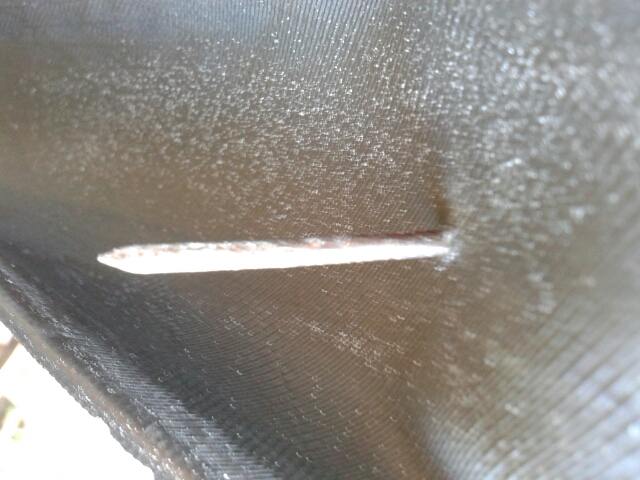
The tyre is a Vittoria Zaffiro Pro 700 x 25C. I chose this tyre because this bike is usually configured as a town bike and I often do not carry a puncture repair kit for my rides down to the local shops. The Vittoria Zaffiro is the most puncture resistant tyre that I use, but as you can see, was no match for a big nail!

image

image


image

TA Specialities chainring — 48 tooth, 144 mm BCD competition piste

One of the things that I love about cycling is getting shiny new chunks of metal in the mail. The TA Specialities chaingring is just such a piece of metal. Yumo.

I recently entered the world of track racing at Chandler Velodrome. As any track rider knows, having a set of chainrings and cogs allows you to dial in the exact gear that you want.

With 49, 50 and 51 tooth 1/8″ chainrings, I felt that I also needed a 48 tooth, hence the new TA Specialities chainring.

I also have 46, 48 and 52 tooth 3/32″ chainrings, but I use them on my Wabi Special.

All these chainrings are in 144 BCD (bolt circle diameter) to fit my Andel cranksets on the Wabi Special and my Cell Bikes fixie configured as a track bike.

wpid-20140905_100259.jpg

wpid-20140905_100312.jpg

Coleman Event 12 sun shelter

A few years ago, I purchased a Coleman Event 12 sun shelter. For one reason or another, I had not even taken it out of its bag, let alone taken it camping.

With another camping trip planned, I thought it was time to pull out the Coleman Event 12 sun shelter and take a look at it.

I specifically purchased the Coleman Event 12 because its pack size is slightly shorter than the larger Coleman Event 14, meaning that it can fit longitudinally in the boot of my Toyota Prado with my other camping gear.

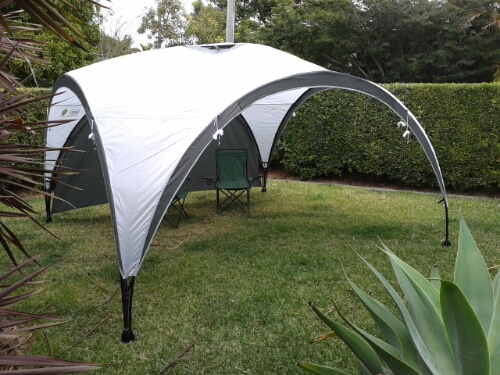
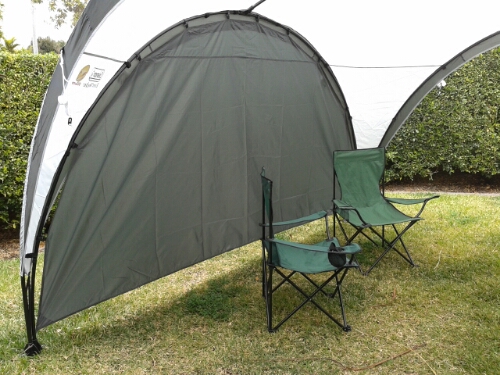
When erected, the Coleman Event 12 is smaller than the Event 14, but still provides very useable space. My Event 12 also came with a sun wall, which you can see in the photos.

image

image

image

image

image

Cell Bikes fixie at Chandler Velodrome

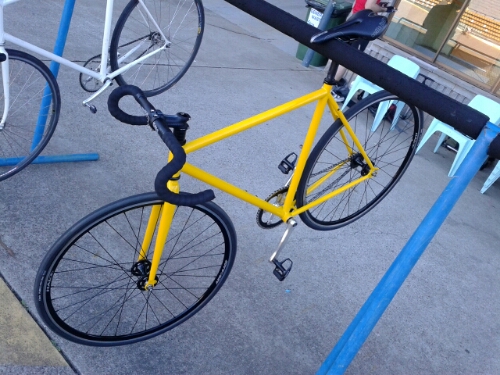
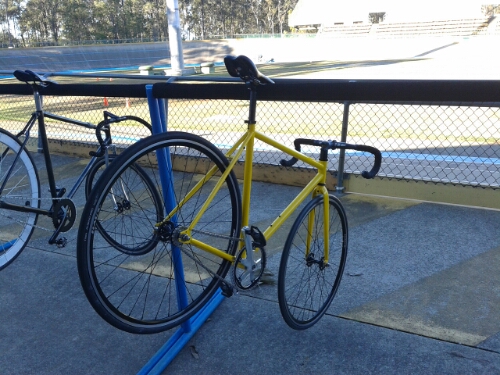
My yellow Cell Bikes fixie, which my kids have affectionately named Bumblebee, is currently configured as a track bike.

My Cell Bikes fixies (I have two) have been through many guises, including a singlespeed ridden on the 100 km Brisbane to Gold Coast cycle ride at an average speed of more than 30 km/h, ridden up Mt Coot-tha, and configured as a sit-up town bike with swoopy bars.

Recently I have been using a Cycling Queensland track hire bike to train on Chandler Velodrome in Brisbane, Queensland. I was keen to ride one of my own bikes on the track and had heard of other people riding Cell Bikes fixies on velodromes. I stripped my Cell Bikes fixie of brakes and the water bottle cage, replaced the riser bars with PRO PLT compact drop bars, and put on some 165 mm 144 BCD Andel RSC1 cranks.

I took the bike down to a training session to see whether it would be okay to ride on the track. My main concern was that with a 65 mm bottom bracket drop, the bike is at least 7 mm lower than a typical bunch-start track bike. However, with the shorter cranks, I was able to get enough clearance to ride safely around Chandler Velodrome.

image

image

Chandler Velodrome, being an outdoor 333 metre track, has relatively shallow banking at around 30 degrees for an international standard velodrome. Indoor international standard velodromes are typically 250 metres (or less) and have banking of at least 42 degrees. On the other hand, many regional velodromes in Australia have track banking much shallower than Chandler Velodrome.

My point is, if you are thinking of putting a Cell Bikes fixie on the track, check with your local club first. Depending on the track specifications, and how strict your club is, you may be able to put a Cell Bikes fixie on the track and safely have heaps of fun for not very much money!

Andel RSC1 crankset upgrade for Cell Bikes fixie

I decided to upgrade the cranks on my Cell Bikes fixie because I want to ride this bike on Chandler Velodrome. The original cranks were 170 mm and 130 bcd. I also wanted to be able to swap chainrings with my Wabi Special which has 144 bcd cranks/chainrings, so decided to upgrade the cranks on the Cell Bikes fixie to 165 mm 144 bcd Andel RSC1 cranks. This meant also changing the bottom bracket to a 107 mm Shimano BB-UN55, as well as an assortment of chainrings.

wpid-20140814_130534.jpg

The complete build list is:

  • Andel RSC1 165 mm 144 bcd crankset (562 grams)
  • Chainring bolts supplied with Andel crankset (21 grams)
  • Shimano BB-UN55 107 mm bottom bracket (288 grams)
  • Generic bottom bracket bolts (27 grams — pair)
  • Kirrawee Cycles BBK 144 bcd chainrings 49 tooth (119 grams), 50 tooth (137 grams) and 51 tooth (124 grams).